Giggles
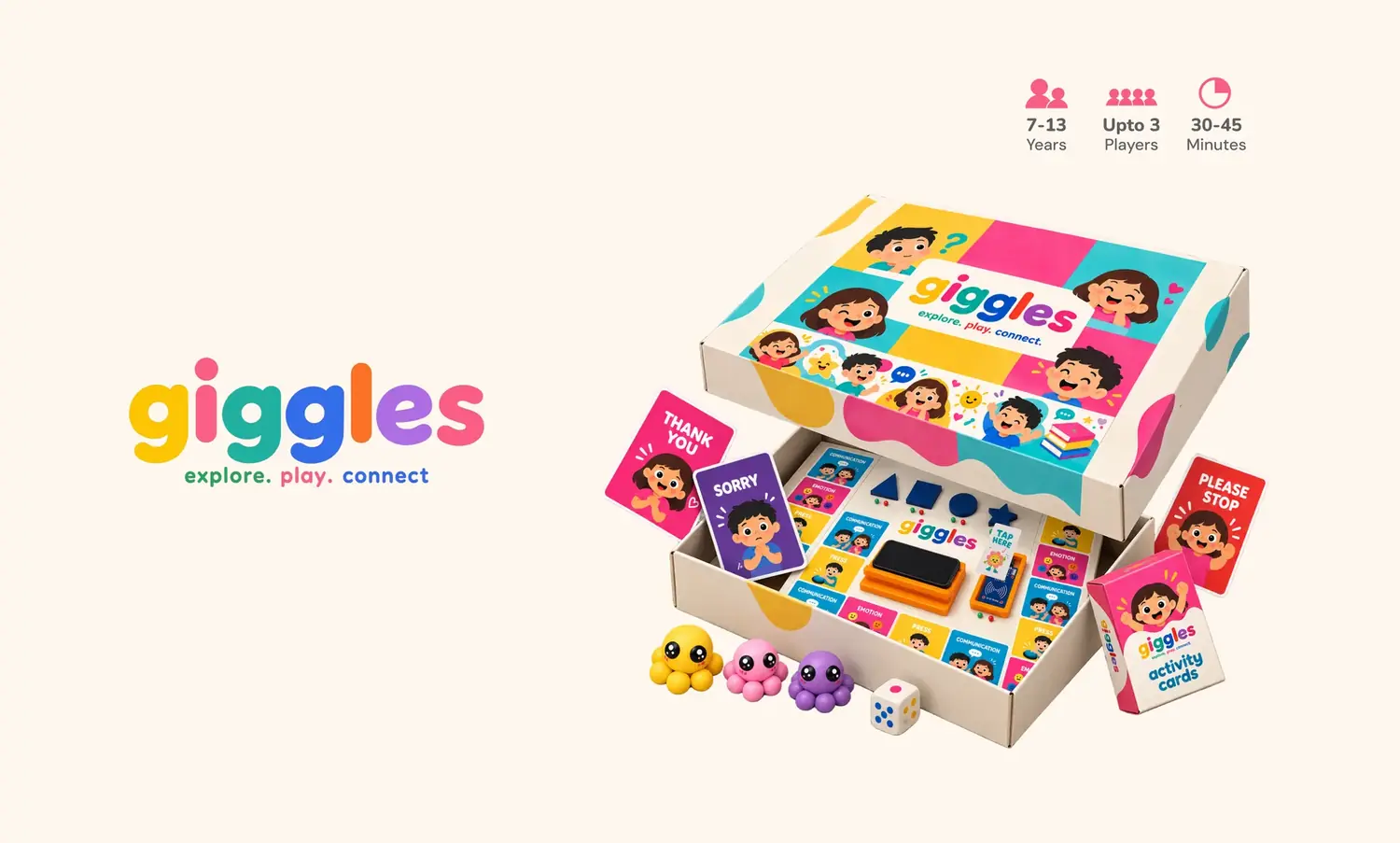
A physical-digital game for autistic children, combining play, tangible interaction and code.
- Project Type
- Academic Project
- Duration
- 3 weeks
- Team
- Team of 5
- Context
- Tangible Interface Design
At a glance
Problem
Children with autism can experience communication, sensory input and learning in different ways. Traditional learning activities may not always provide the clarity, predictability and engagement they need.
Solution
Giggles is a tangible physical–digital learning game that makes learning more interactive and approachable through play. It brings together communication, emotion recognition and motor activities in one experience.
01What shaped Giggles
Starting with the spectrum
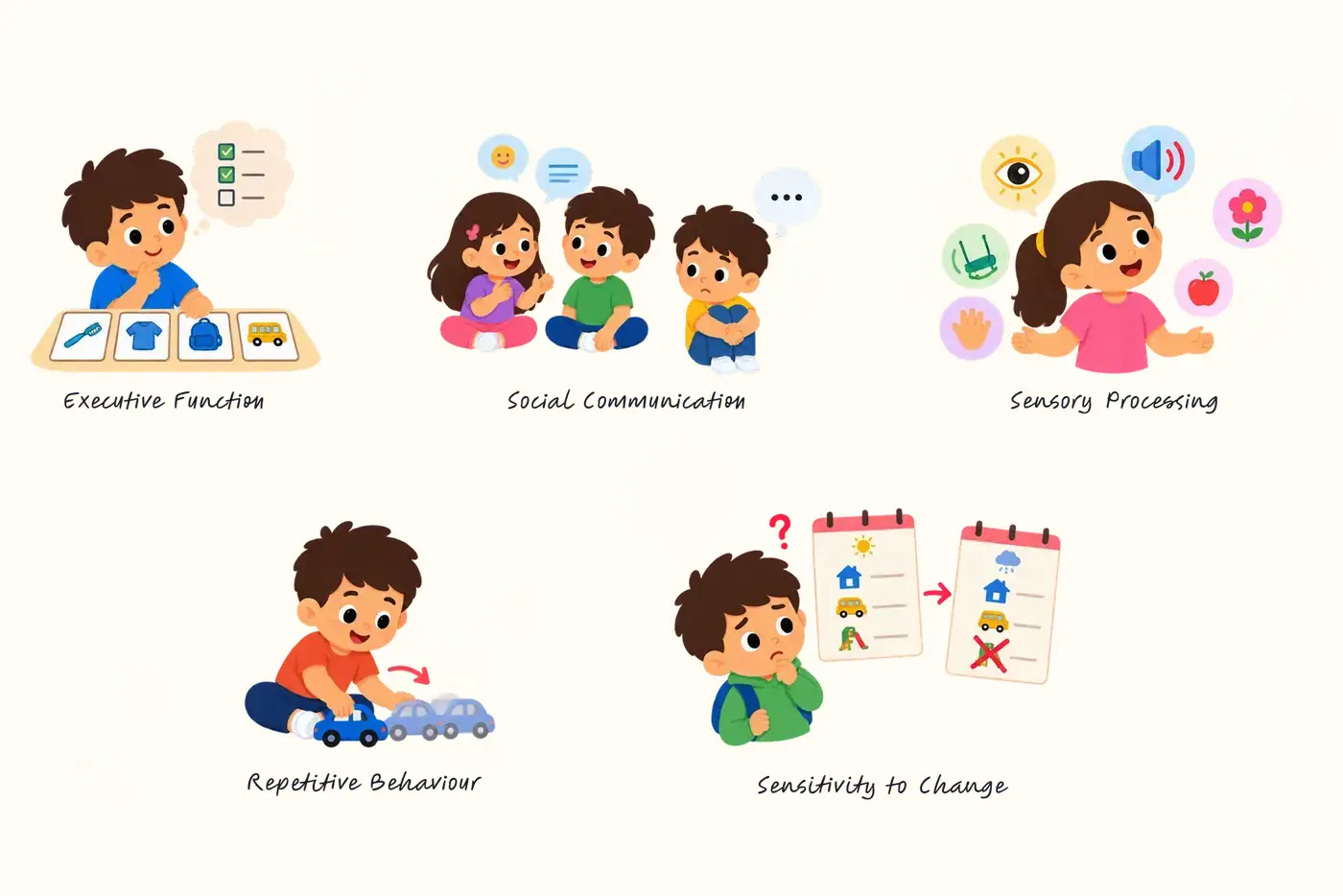
Giggles was designed for autistic children aged 7–13. Before deciding what the experience should be, we looked at how autism can influence everyday interaction and learning.
What stood out
Social situations and sequences may not always be immediately understood.
Familiarity and routine can help reduce uncertainty.
The same environment can feel very different from one child to another.
Support needs are not the same for every child.
How is learning currently supported?
We looked at existing approaches to understand how communication, structured learning, sensory processing and everyday activities are currently supported.
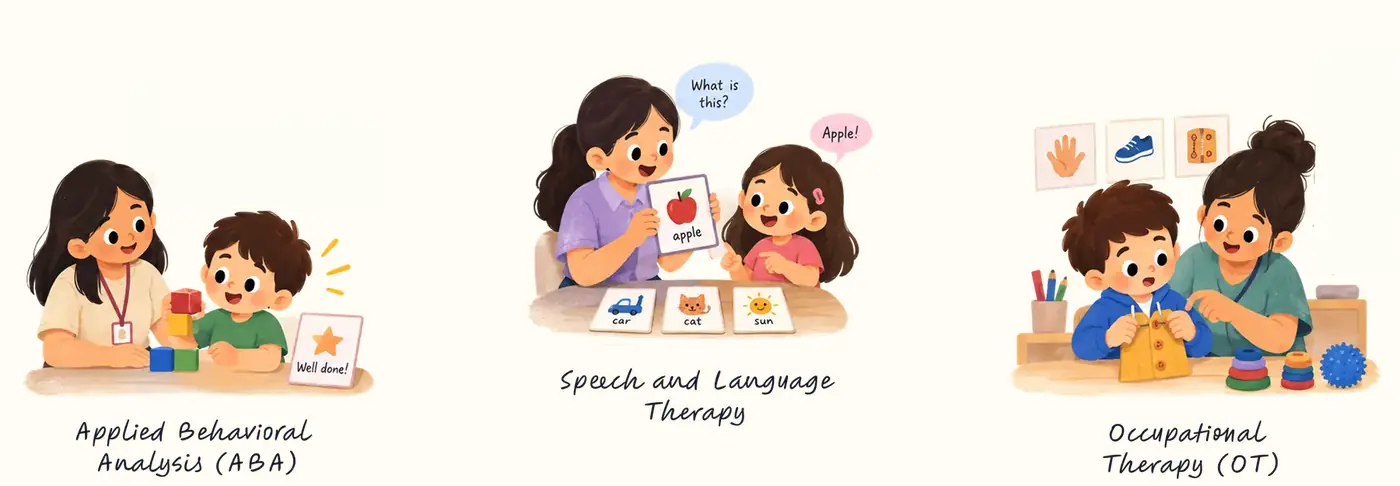
This gave us a starting point for exploring how these needs could translate into tangible interactions.
Exploring tangible interactions
We explored three directions around emotion recognition, everyday sequencing and social situations.
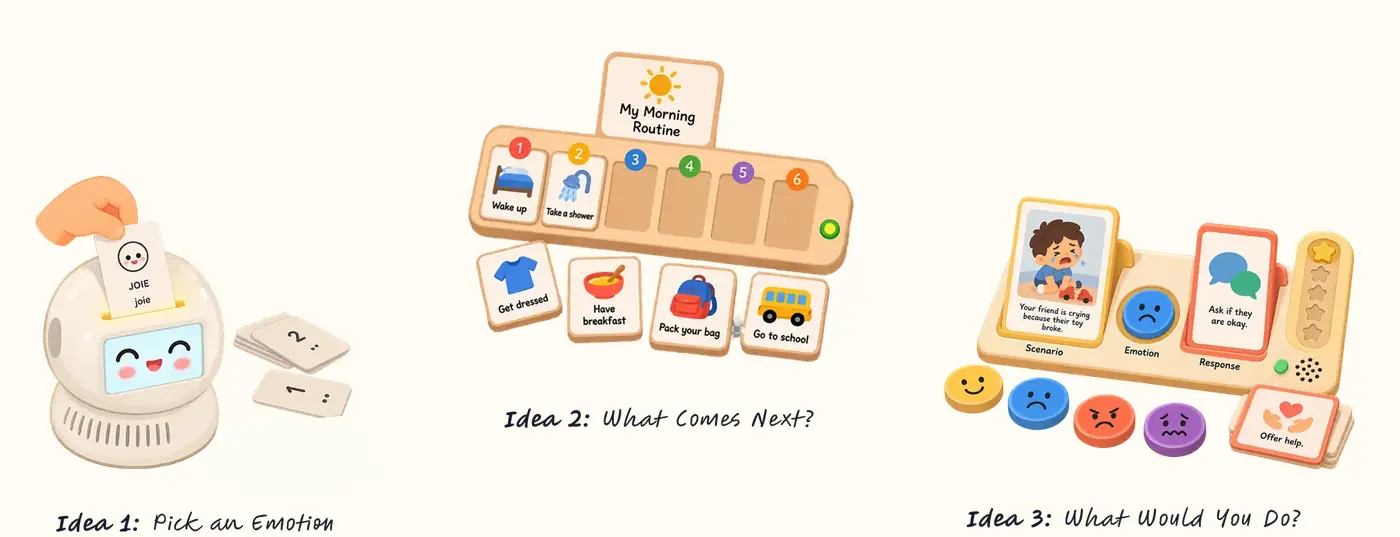
Across the three directions, children weren't only viewing information — they were choosing, arranging and placing physical objects as part of the activity.
These explorations came together in Giggles.
Giggles became an RFID-enabled physical–digital board game where children move through different learning activities and respond through tangible interactions.
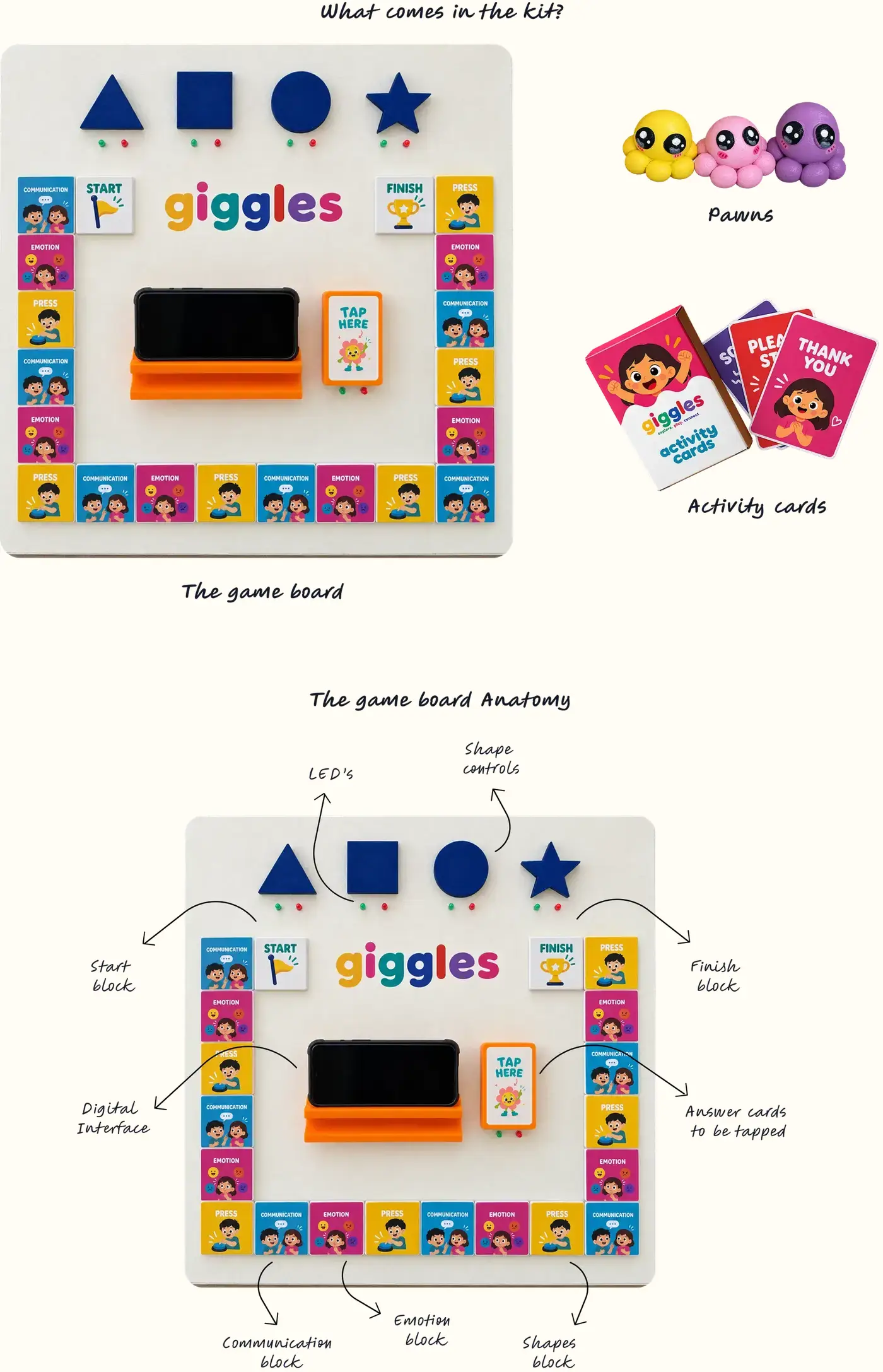
02Designing the child's interaction
Three activities. Three ways to respond.
The final game brings three different activities onto the same board.
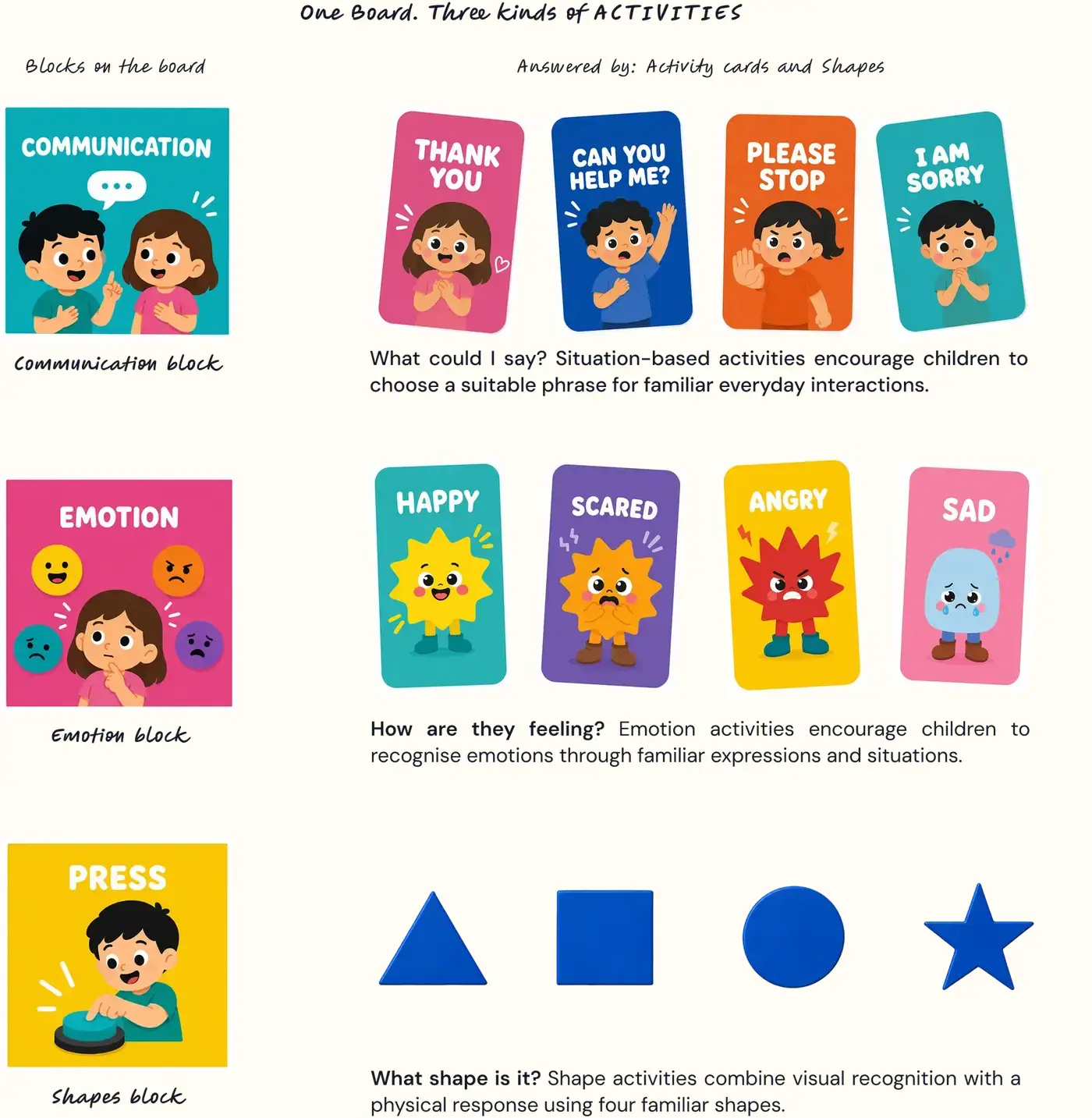
Keeping the interaction consistent
Although the activities change, each turn follows the same basic rhythm:
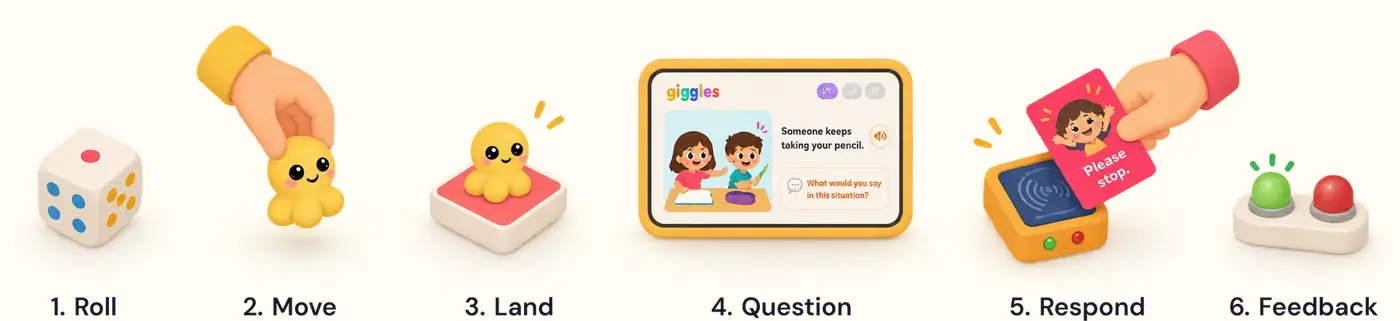
Same block, different question
Each category contains a pool of six questions. Once a question appears, it is temporarily removed from the available pool.

This reduces immediate repetition without changing the physical structure of the game.
What happens when an answer is incorrect?
Instead of revealing the correct answer immediately, the same activity remains active while the amount of support gradually increases.
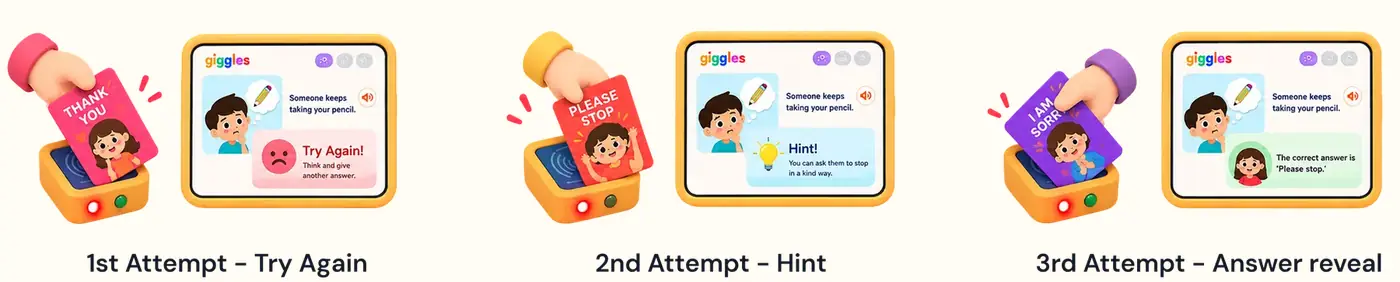
Try again
The child gets another attempt.
Hint
A hint is introduced before they respond again.
Answer reveal
After another incorrect attempt, the correct answer is shown.
03From play to educator insight
Both children got the answer right.
CHILD A
Correct on first attempt.
CHILD B
Try Again → Hint → Correct.
But they didn't take the same path to get there.
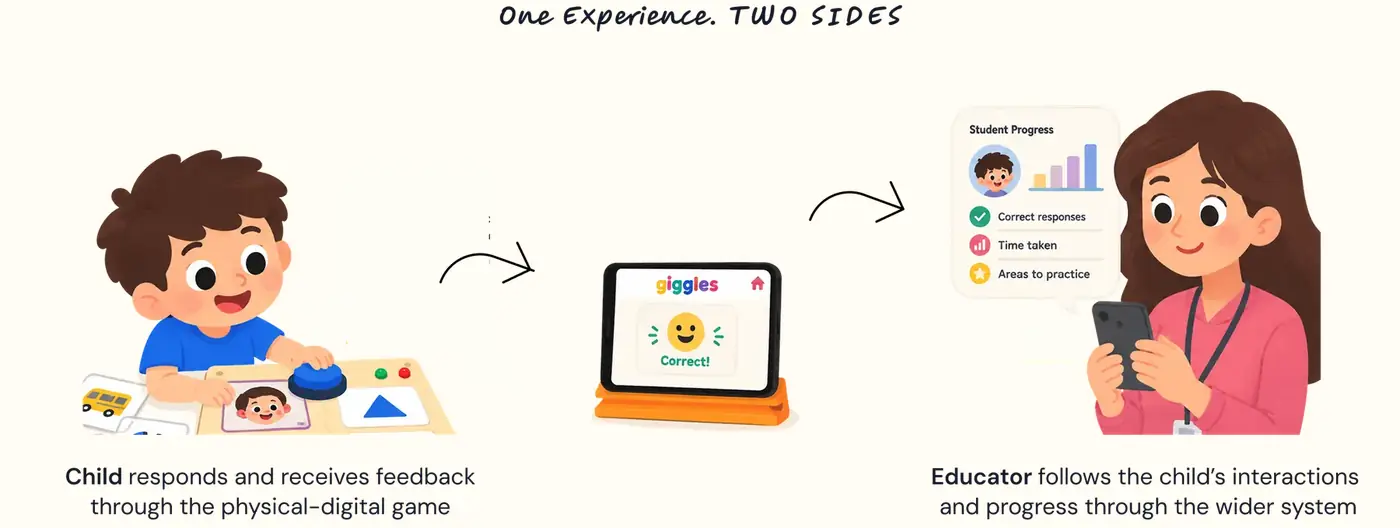
Giggles explores how the interactions leading to an answer could become useful context for the educator — not just whether the final response was correct.
04Designing the experience
From game logic to interface
The child-facing interface keeps the question, visual and feedback central while the physical board remains the primary way to interact.
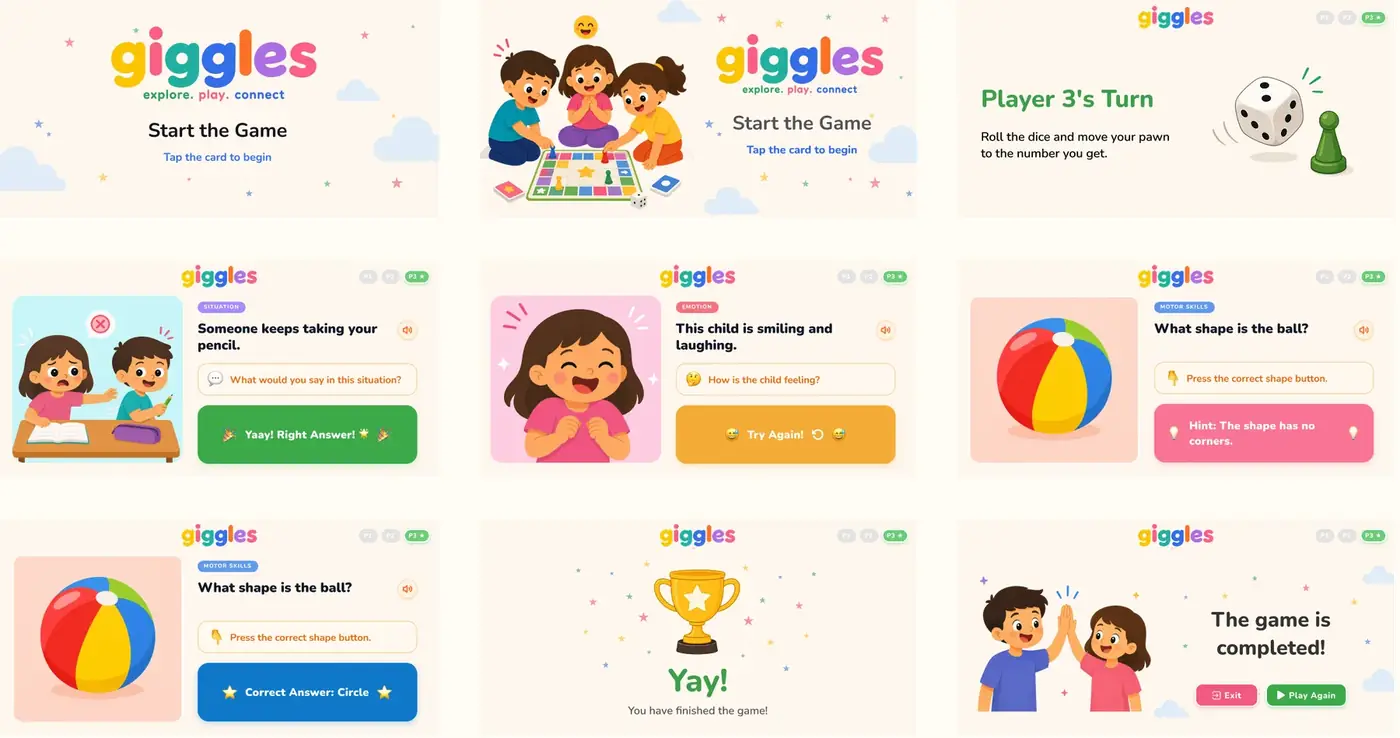
The educator side
The educator-facing concept brings session activity, attempts and progress into a separate view.
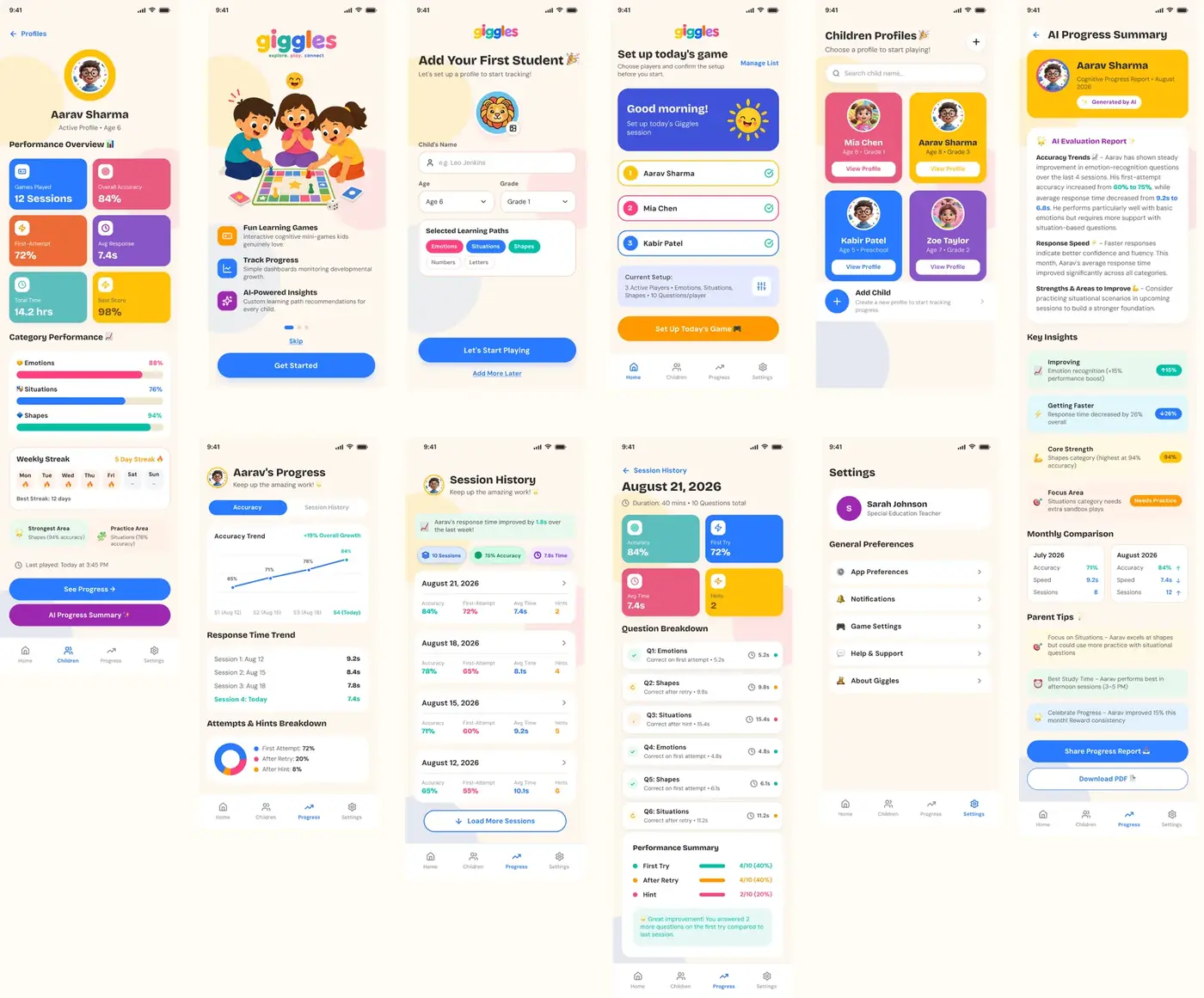
05From design to working prototype
We didn't stop at Figma.
The final step was making the physical board and digital interface actually respond to each other.
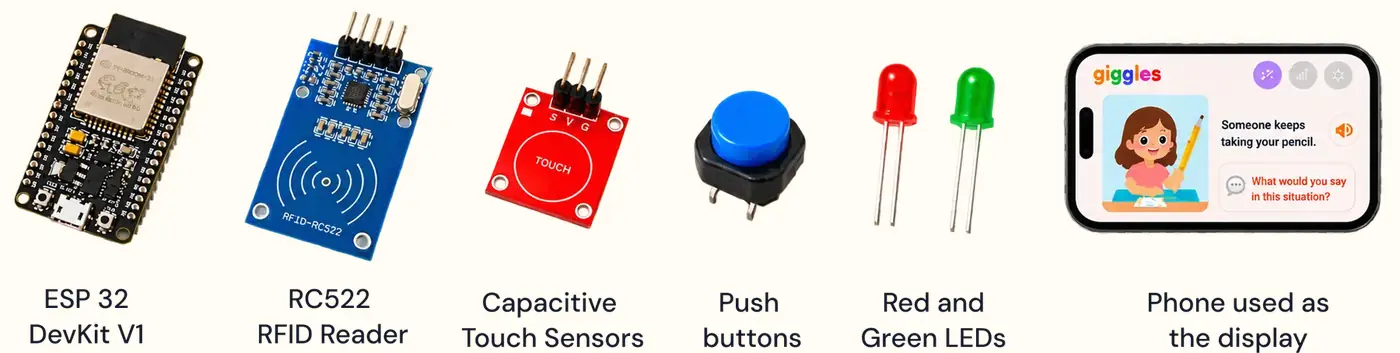
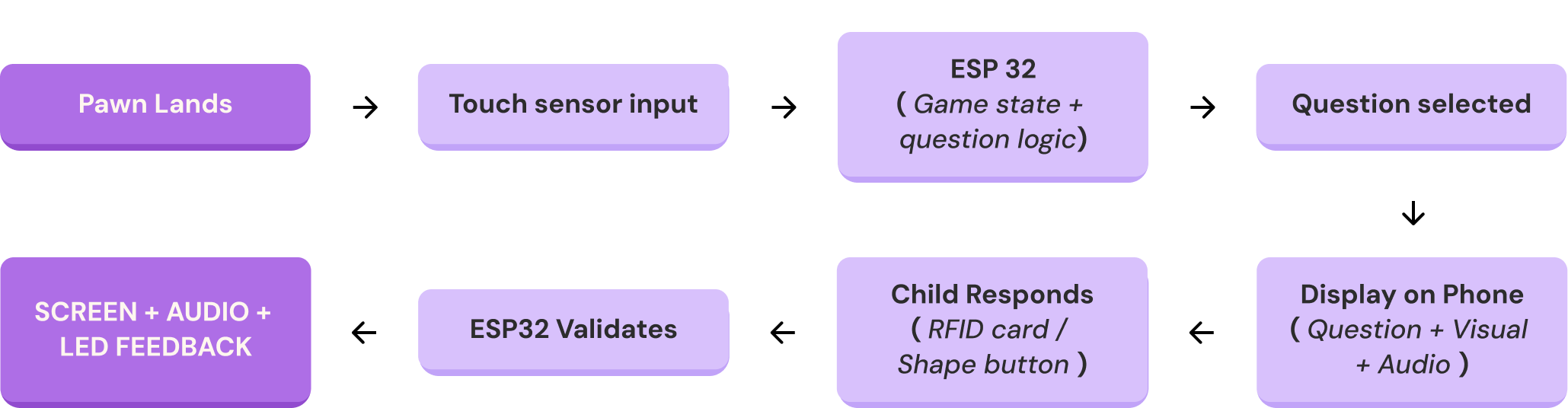
The prototype uses an ESP32 to connect the physical board, RFID interactions, shape controls and feedback with the child-facing phone interface.
And finally, it all came together.
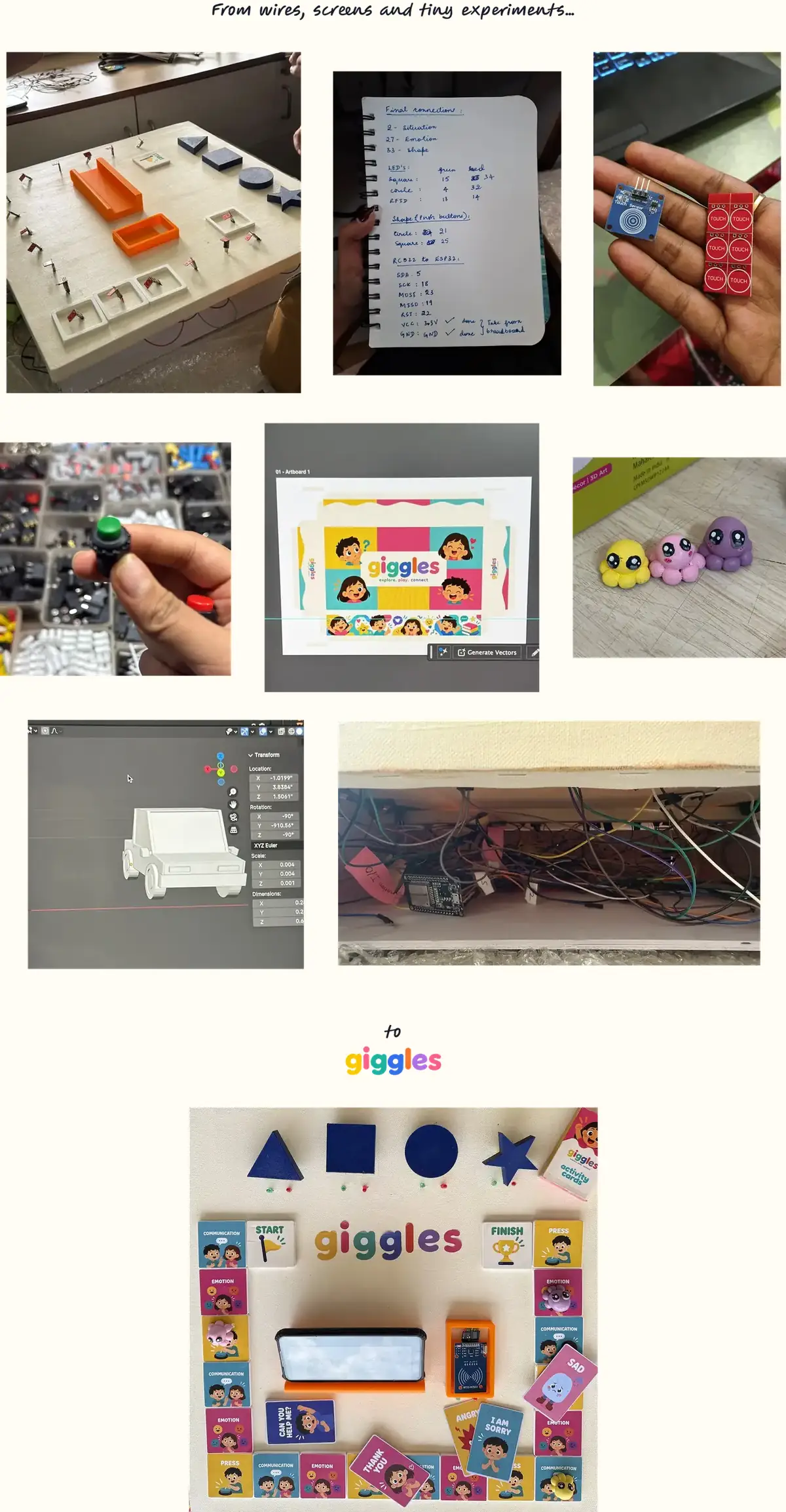
Behind the scenes
06Reflection
What I took away from Giggles
Designing the interaction beyond the screen
Working with RFID, physical controls, LEDs and a digital interface made us think about an interaction as something that moves between physical and digital touchpoints, rather than something that happens entirely on a screen.
Designing the response, not only the question
The Try Again → Hint → Answer Reveal logic made the feedback itself part of the experience. What happened after an incorrect response became as important to define as the activity itself.
Thinking beyond the final outcome
Exploring the educator side shifted the focus from simply recording whether an answer was correct to considering the path a child took to reach it.
More on Display

view detailed case study